
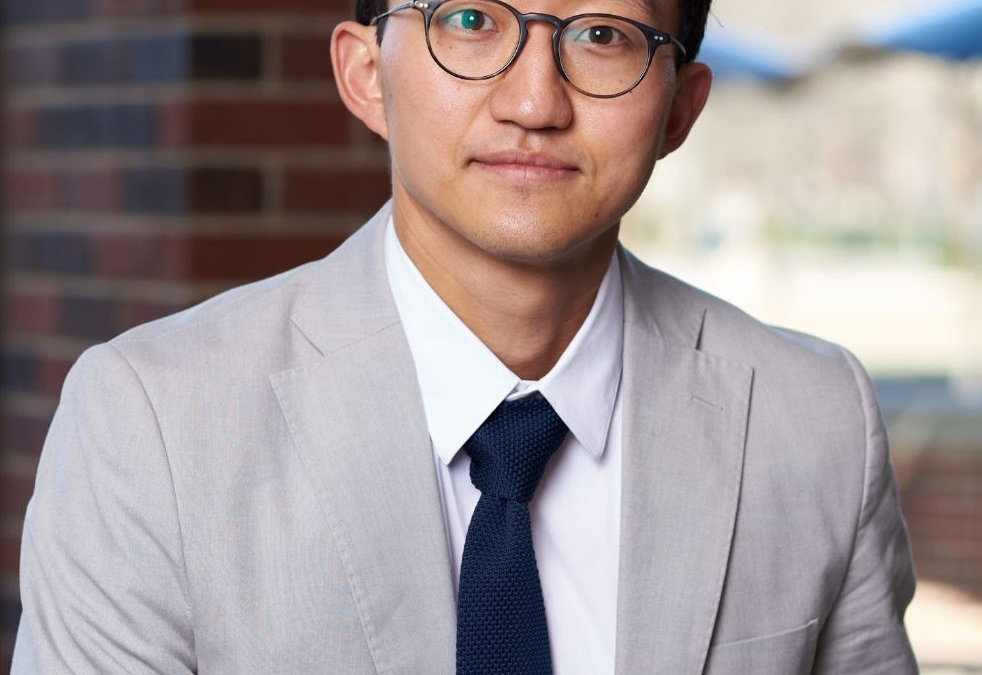

Speaker: Nak-seung Patrick Hyun
Affiliation: Korea University
ABSTRACT: Highly agile and extreme behaviors of many biological systems offer examples for future research directions to target similar mobility in bio-inspired robots, understanding the complex dynamics and subsequent design of a robust and adaptive control framework. Examples of extreme behaviors in biological systems are the fast oscillation-driven maneuvers of bees flapping their wings around 200 Hz and the rapid, impulsive striking of mantis shrimp, releasing their stored potential energy within milliseconds. The challenges in controlling robots with similar extreme behaviors lie in the highly nonlinear dynamics that operate over multiple timescales. Specifically, one has to account for fast dynamics (extreme motions) and slow dynamics (time-averaged motion or slower drift in the system), and the time-varying actuation model in the high-frequency regime (fast-dynamics) vs the low-frequency regime (slow dynamics). This talk will address the control-theoretic aspects of dealing with such challenges in bio-inspired robots based on first principles in mathematical system theory. The first part of this talk will address the recent progress in controlling an insect-scale flapping-wing vehicle that flaps its wings at around 150Hz, and a bird-scale robot that flaps at around 20Hz. In addition, the recent findings on the nonlinear modeling of the dynamic principles of mantis shrimp impulsive strike will be covered, which enable striking speeds of up to 27 m/s within a few milliseconds. Lastly, this talk will discuss current ongoing work on a new direction in bio-inspired design and control of over-actuated network-based robotic systems, as well as the development of synthetic robots to understand vibration-based bird-like systems.
BIOSKETCH: Nak-seung Patrick Hyun is an assistant professor in Electrical Engineering at Korea University and an adjunct faculty member at Purdue University. He was previously an assistant professor in the Electrical and Computer Engineering department at Purdue University from January 2023 to August 2025. He was formerly a research associate at the Harvard Microrobotics Laboratory, hosted by Robert J. Wood. He received a Ph.D. in Electrical and Computer Engineering in 2018, an M.S. degree in Mathematics in 2013, and an M.S. degree in Electrical Engineering in 2013 from the Georgia Institute of Technology. His research focuses on the control-theoretic aspects of bio-inspired robots, emphasizing systems with extreme behaviors, such as flapping vehicles and impulsive systems. His research program provides a cyclic learning cycle between biology, mathematical system theory, and robotics. His recent work has been published in multidisciplinary science domain journals, including Science Robotics, Nature, and PNAS, as well as in control theory journals such as Automatica and Nonlinear Analysis: Hybrid Systems. He is the recipient of the Ruth and Joel Spira Outstanding Teacher Award at the Purdue ECE department in 2024. His previous research at Georgia Tech addressed a new framework for causal modeling of impulsive systems and optimal safe path planning for multi-agent systems.
Date/Time:
Date(s) - Feb 06, 2026
12:00 pm - 1:00 pm
Location:
47-124 Engineering IV
420 Westwood Plaza Los Angeles CA